WELCOME TO WIHPQC 2026
The Sixth International Workshop on Integrating High-Performance and Quantum Computing
At IEEE Quantum Week
Toronto, CA
Quantum computers, QCs, come with the promise of a substantial increase in computational capabilities compared to binary computer architectures for a range of suitable problems. They therefore have the ability to make significant contributions to the field of High-Performance Computing, HPC. On the other hand, though, quantum computing alone cannot achieve this goal, as it requires current and future HPC systems to function. As a consequence, we need a close integration between the quantum computing and the current HPC ecosystems, to form an integrated HPC/QC approach capable of bringing the combined computational abilities to a broad user base.
In this workshop, we bring together practitioners, theoreticians and users from HPC, QC and the application disciplines, to understand the needs and requirements from both sides for such an integration, to report on and discuss innovative approaches and to build a long-term bridge between the involved communities.
CALL FOR PAPERS
We invite high-quality short paper submissions on all topics related to integrating QC into the existing binary computing eco-system, with a particular focus on combining HPC and QC. We explicitly encourage submissions at all levels of the system stack, ranging from hardware integration to programming models and environments, from system software to theoretical foundations, as well as covering hybrid applications.
Papers will be reviewed by an international program committee. Reviews are blind, but not double-blind. The names of the authors will be seen by the program commit-tee.
To be considered, papers must be submitted as PDF files via EasyChair.
Papers must follow the formatting instructions of the main conference at https://qce.quantum.ieee.org/2026/ and must be at most 4 - 6 pages long.
For any questions, please contact Martin Schulz at schulzm@in.tum.de
Topics
The list of interests includes, but is not limited to, the following topics:
- Joint and hybrid programming models, tools and environments
- Hybrid applications using both HPC and QC
- Operating system, middleware, and run-time system support
- Compiler optimizations and techniques
- Hardware/software design trade-offs in integrated system
- Quantum control processors and firmware
- Housing of QC systems in data center facilities
- Efficient cloud access to QC resources
- Simulation and emulation of HPC/QC systems
ORGANIZATION
Co-Chairs
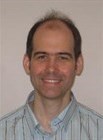
Sven Karlsson
DTU, Denmark
Co-Chairs

Laura Brandon Schulz
Argonne National Laboratory, USA
Co-Chairs
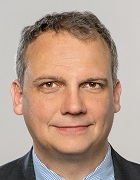
Martin Schulz
TUM, Germany
| Time |
Talk Title | Speaker/Authors |
|---|---|---|
| 10:00 - 10:05 | Welcome to WIHPQC26 | |
| 10:05 - 11:00 |
Keynote Title: TBD |
|
| 11:00 - 11:30 |
Paper 1 Title: Empirical Study of HPC–Quantum Hybrid Environments via Generative Modeling Benchmark |
Julien Rauch, Damien Rontani, Stephane Vialle and Miwako Tsuji |
| Time |
Talk Title | Speaker/Authors |
|---|---|---|
| 13:00 - 13:30 |
Paper 2 Title: Integrated Quantum and High-Performance Digital Annealing for Efficient Frontier Approximation |
Yao-Hsin Chou, Shu-Yu Kuo, Kun-Lin Lee and Jyun-Yi Shen |
| 13:30 - 14:00 |
Paper 3 Title: Towards Tensor-Network SAT-Solvers for Quantum-Classical Workflows |
Benjamin Zec, Lukas Schmidbauer, Maja Franz and Wolfgang Mauerer |
| 14:00 - 14:30 |
Paper 4 Title: Practical Example of Optimal Scheduling of Hybrid Quantum-Classical Workflows |
Vadim Elisseev, Vasileios Kalantzis, Gabor Samu and Ritesh Krishna |
| Time |
Talk Title | Speaker/Authors |
|---|---|---|
| 15:00 - 15:30 |
Paper 5 Title: Kubernetes-Orchestrated Hybrid Quantum–Classical Workflows |
Mar Tejedor, Michele Grossi, Cenk Tüysüz, Ricardo Rocha and Sofia Vallecorsa |
| 15:30 - 16:30 | Panel: Wrapping up the week: What have we learned about the state of HPCQC? |
Registration & Participation
Registration will be through IEEE Quantum Week
More information on the IEEE Quantum Week 2026 can be found at: https://qce.quantum.ieee.org/2026/